
Systems Designed for Forklift Traffic and Impacts
Industrial Floor Coatings in Wylie for Facilities Where Equipment Loads Exceed Residential Standards
Warehouse floors develop linear wear patterns along forklift routes because uncoated concrete abrades under steel wheels and point loads, creating dust and surface deterioration that accelerates over time. Industrial floor coatings installed by Platinum Epoxy Pros throughout the Wylie area build a wear-resistant layer that withstands heavy traffic, chemical exposure, abrasion, and impact in warehouses, manufacturing facilities, and commercial workshops. These systems use resins and aggregate formulations engineered for loads and stresses that would quickly destroy residential-grade products.
Installation specifications vary by facility requirements and may include moisture mitigation layers, high-build epoxy or polyurethane systems, and topcoats selected for specific chemical resistance profiles. Cure times depend on system complexity and ambient conditions, with some projects allowing phased installation to maintain partial facility operation during application. Expected service life commonly reaches or exceeds twenty years when substrate preparation removes weak concrete and surface contaminants that compromise adhesion under sustained loading.
Schedule an on-site evaluation to review traffic patterns, chemical exposures, and substrate conditions that determine system selection.
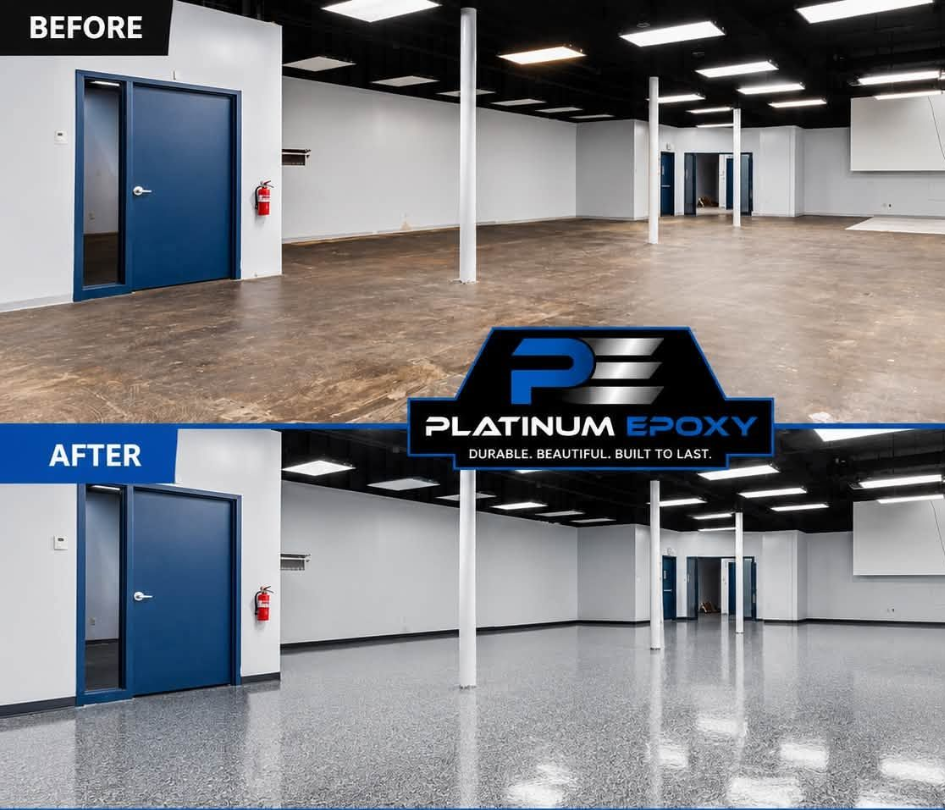
How Industrial Systems Handle Demanding Environments
Industrial coatings bond mechanically to concrete profiles created by shot blasting or scarification, processes that expose aggregate and remove laitance to depths exceeding residential preparation standards. The coating thickness and hardness must resist both the compressive forces from point loads and the shear forces from turning equipment, which requires formulations with higher cross-link density than decorative systems. Chemical resistance varies by resin chemistry, with epoxies handling most industrial solvents and acids while polyurethanes offer superior resistance to caustics and sustained moisture exposure.
After installation, facility managers notice reduced concrete dusting because the coating seals surface porosity, improving air quality and reducing cleaning frequency. Forklift tires roll smoothly without the vibration caused by joint edges and surface irregularities in deteriorated concrete, and spills from hydraulic fluid or process chemicals wipe clean without etching permanent stains. The coating's light reflectivity improves visibility under existing fixtures, often eliminating the need for additional lighting to meet safety standards.
System selection depends on whether the facility handles food products requiring USDA compliance, chemical processes requiring specific solvent resistance, or cold storage requiring low-temperature flexibility. Some industrial coatings incorporate anti-static properties for electronics manufacturing or spark-resistant aggregate for environments with flammable vapor risks, requirements that demand engineered solutions rather than off-the-shelf products.
What Facility Managers Usually Ask
Industrial coating decisions require understanding how systems perform under operational stresses specific to each facility type.
What distinguishes industrial coatings from commercial or residential systems?
Industrial formulations use higher molecular weight resins and may include aggregate reinforcement to achieve compressive strengths and abrasion resistance measured in multiples of standard products, with testing protocols that simulate years of traffic in accelerated wear cycles.
How do coatings handle chemical spills in manufacturing environments?
Resin selection determines resistance, with novolac epoxies tolerating strong acids and solvents that attack standard bisphenol epoxies, though even resistant coatings require prompt cleanup to prevent prolonged exposure that eventually penetrates any organic coating.
Why does substrate moisture testing matter for industrial applications?
Concrete in warehouses and manufacturing facilities often contains residual moisture from construction or groundwater vapor transmission, and coatings applied over wet concrete delaminate when water vapor pressure exceeds bond strength, particularly under non-breathable systems.
When should facilities plan coating downtime in Wylie's climate?
Temperature and humidity affect cure rates significantly, with cooler months sometimes extending cure times but providing more stable conditions than summer heat, which can cause rapid solvent evaporation and surface defects if ventilation isn't carefully managed.
What maintenance protocols extend industrial coating life?
Facilities should implement regular cleaning that removes tracked-in aggregate and metal particles that act as abrasives under traffic, and prompt spill cleanup prevents chemical attack that degrades coating integrity over time.
Platinum Epoxy Pros works with facility managers to develop coating specifications that match operational demands and maintenance capabilities. Schedule a consultation to review your floor condition, discuss traffic patterns, and establish a project timeline that minimizes disruption to operations.